
General Equipment Hazards
Safety is of paramount importance when operating and interacting with the BioDryer, an automated machine designed to function autonomously in auto-mode. To ensure the safety of all personnel, it is crucial to maintain a minimum distance of three feet from the machinery while it is in operation. This safe distance helps prevent accidents and injuries that could occur due to unexpected machine movements or processes.
Operators and maintenance personnel must exercise extreme caution, especially regarding any form of intervention on the machine. It is imperative that no maintenance tasks or physical interactions with the BioDryer be attempted while the machine is in auto mode or powered on. Doing so can pose significant safety risks, including the potential for mechanical hazards.
Strict adherence to these safety guidelines is essential not only for personal safety but also for the smooth and efficient operation of the BioDryer. Always ensure that the machine is completely powered off and secured before attempting any maintenance. This practice ensures a safe working environment and preserves the integrity and functionality of the BioDryer.
Hazard Areas
The area surrounding the BioDryer could be designated as a Class 2 Division II hazardous location, depending on where it is installed. This classification is due to the potential presence of dry biosolids dust outside the BioDryer, which can be mildly explosive when concentrated.
If a Class 2 Division II area is assigned to your BioDryer, it is essential to understand and respect the specific risks associated with the environment:
Under no circumstances should open flames or sources of ignition be introduced within this area. The presence of dry biosolids poses a significant risk of combustion if exposed to flames. The introduction or use of combustible fuels within this zone is strictly forbidden. The potential interaction between these fuels and the biosolids could lead to hazardous conditions.
Defined Hazardous Zone:
The hazardous area extends to a radius of 10 feet around the BioDryer. This zone must be clearly marked and adhered to at all times to ensure safety.
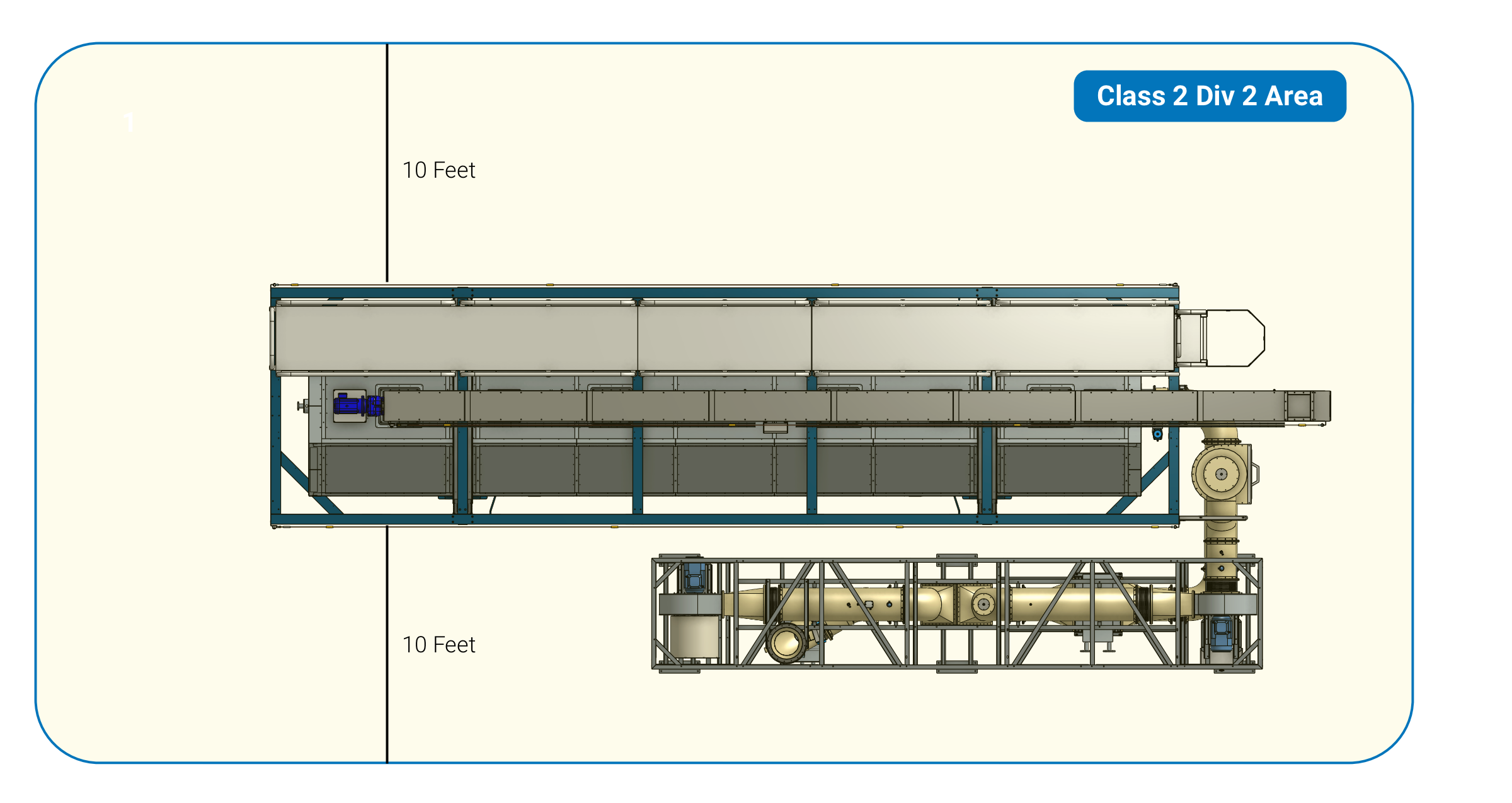
Operators and personnel must be thoroughly trained and made aware of these restrictions. Compliance with these safety protocols is not only a matter of operational integrity but also of protecting the health and safety of everyone working in and around the BioDryer. It is imperative that all activities within this zone are conducted with the utmost caution and in accordance with all relevant safety guidelines and regulations.
Compressed Air and Pressurized Water Warning
In this section, we address the crucial safety considerations regarding the use of compressed air and the operation of the high-pressure hot water loop within the BioDryer system. Both of these elements are integral to the machine's function but require careful handling and awareness due to their inherent risk
Compressed Air Safety
Compressed air is used in various applications within the BioDryer system. While it is a powerful and useful tool, it can also be hazardous if not used correctly. It is vital to always handle compressed air tools and connections with caution. Misuse or accidental release of compressed air can lead to serious injury or equipment damage. Ensure that all safety protocols are followed when working with or near compressed air systems.
High-Pressure Hot Water Loop Precautions
The hot water loop in the BioDryer operates under high pressure, with water temperatures reaching up to 200°F. This presents a significant risk of burns and other injuries if not handled properly.
- Leakage and Repairs: Under no circumstances should attempts be made to repair leaks or operate on any part of the piping system while it is pressurized and hot. The high temperature and pressure of the water can result in severe injuries.
- System Depressurization: Before performing any maintenance or inspection on the hot water loop, it is imperative to ensure that the system is fully depressurized and the water has cooled down to a safe temperature.
- Training and Awareness: All personnel working with or around the hot water loop must be adequately trained and made aware of the hazards associated with high-pressure and high-temperature systems.
Strict adherence to these guidelines is essential for the safety of all personnel involved. Always prioritize safety by following the established procedures and never take shortcuts when dealing with compressed air and pressurized, high-temperature systems.